Tag Archives: Books

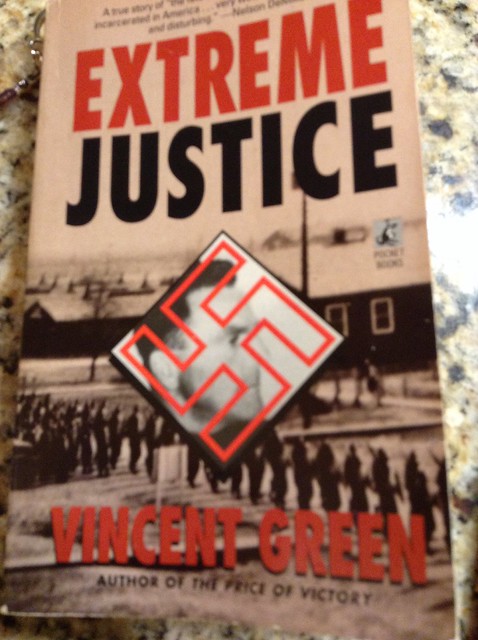
Extreme Justice by Vincent Green

Photo 2 - 2016-03-25

I just finished reading Extreme Justice by Vincent Green. It is a fictionalized account of an interesting historical event. The murder during World War II of a German soldier by Johannes Kunze by his fellow prisoners at a prisoner of war camp in Tonkawa, Oklahoma,after they found out that Kunze was acting as an informant to the Americans. It is a fascinating book from many different aspects. The soldiers were some of the 275,000 German soldiers of the famed German Afrika Corps who surrendered to the Americans and British after losing the battle North Africa.

Some interesting things to me were that the German non-commissioned officers strictly forbade the soldiers under them to read anything the Americans provided about the war. They insisted that the Germans were winning the war and that soon America would be a German colony. They also taunted their American guards by saluting them with Heil Hitler salutes and such. The other thing was that the Americans guarded the perimeter of the camp but the Germans had free rein on maintaining order and discipline inside the camp especially at night.

So what happened was that in November 1943 a German NCO found out that Kunze was informing to the Americans and he scheduled a meeting of the prisoners late at night to discuss the matter. When the other prisoners found out what was happening they rioted and brutally beat and murdered Kunze.
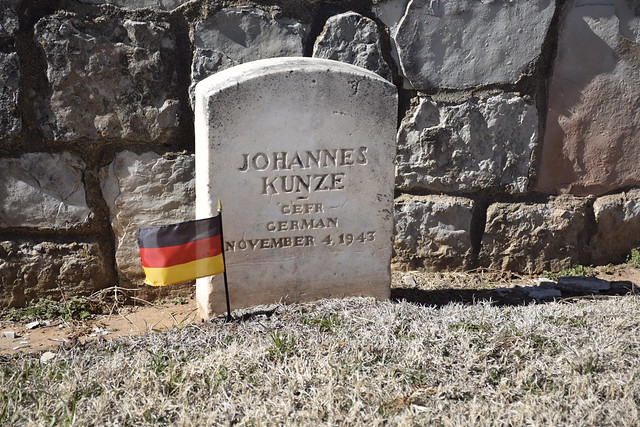
_DSC0802

Kunze’s grave at Fort Reno, Oklahoma. Originally he was buried at Tonkawa but after the war the Army moved the remains of all POWs that were buried in Oklahoma to Fort Reno to a special section of the post cemetery where 62 Germans and 8 Italian POW prisoners were buried (some remains have been removed and sent back to Europe by now)

The American guards finally went in and found out what happened and basically arrested the five prisoners that had the most blood on them. The German’s were flabbergasted because they considered it strictly a German affair and none of the American’s business.  They actually thought that after Germany won the war then it wouldn’t matter.The Americans had a different view. They were afraid that if they let these guys off and word got out then they could lose control of all the POW camps. They also knew that there were American prisoners in Germany who for one reason or another had been sentenced to death but had not been executed yet. Nobody wanted to start the executions because they knew the other side would execute their prisoners. So the Americans wanted a very fair, at least in appearance, trial that would withstand international scrutiny. The trial was to observed by a Swiss Embassy diplomat.

The Americans also wanted the prisoners to be found guilty. For the lead prosecutor they picked their top man, Leon Jaworski, who later became famous as being the Special Prosecutor during the Watergate scandal.  The Army could have picked any defense lawyer in the country to defend the Germans and Jaworski made requests that somebody competent be appointed but the Army appointed a civil attorney from Arkansas who had never tried a criminal case of any sort to be the defense attorney.

So from there it was kind of a farce especially with a jury of American military officers. The trial itself was considered secret and when the verdict came it was considered secret also and none of the prisoners were told what the verdict was or what the punishment would be. They were all sentenced to hang. So they were all led back to their cells where they eventually figured out what their fate was to be.

There was some hope because late in the war, the Americans had 14 Germans condemned to die and the Germans had 15 Americans condemned to death and there was negotiation of a prisoner exchange at the German -Swiss border.  One thing led to another and chaos descended on Germany and then Hitler killed himself and the Americans had no idea who in Germany  could make the exchange happen. Then the the allies liberated the prisoner of war camps and retrieved the condemned Americans. That and the discovery of the German concentration camps had disgusted the world with Germany and Germans and nobody was in a mood to be merciful, and all that destroyed the German’s hopes.

One day, soon after the German surrender, the prisoners, who were held at the Army’s Fort Leavenworth prisoner, were marched one by one a quarter mile to a warehouse where they were hung in a gallows rigged up in an elevator shaft. Apparently it took about 20 minutes for them to die after being hung according to the book although they were unconscious. All told fourteen German POW’s were executed for killing informers among them.

The book is very informative and moves at a fast pace. Yes the trial that the German prisoners had was a farce but they were among 200 or so who beat Kunze to death. Only one person, a German chaplain tried to stop the murder but he was told to leave by the other prisoners. So maybe justice was served but there is a lot of mud out there for everybody.

As an aside we still read about farces like this every day here now in America. Criminals who are defended by incompetent attorneys before judges who don’t seem to care.  I’ve heard that the criminal justice system in the US is not concerned about Justice, it is about due process or procedure. I can’t tell you how many times when an official of a law enforcement agency excuses stupid conduct by an officer by saying, “Everything that was done was in full compliance with our procedures.” Like that excuses anything. Don’t get me wrong, I am a strong supporter of law enforcement and hate criminals but an unjust system is corrosive to society.

Anyways, this is my extended review.

The book is out of print. I purchased a used copy on Amazon for 99 cents plus three times that postage and handling. I also see where you can download a pdf version for free here.
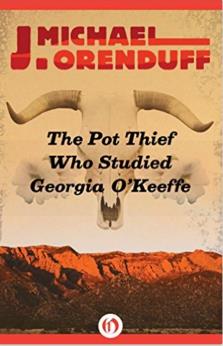

The Pot Thief Who Studied Georgia O’Keefe by J. Michael Orenduff

pot thief okeefe cover

I just finished “The Pot Thief Who Studied Georgia O’Keefe” by J. Michael Orenduff. The seventh book in his “Pot Thief” series. The book, like the rest of the series, is set in New Mexico and features Hubie Schuze, the owner of a native american pot store (the pottery kind of pot, not the Colorado variety) who buys and sells pots but is also known to take his Bronco out to the boonies and dig one up illegally on public land and sell it.

IMG_0827

A pot on display at the Heard Museum in Phoenix

Hubie is quite the character and you can tell the author has fun with him. In the book Hubie falls in love with a beautiful woman. (Thankfully the author closes the blinds and turns up the music on the intimate scenes like I wish more authors would) Hubie also steals a pot from a top secret military installation and makes a copy of it and then finds out that his pots are changing hands way faster than he can keep track of himself and of course one of the characters ends up dead and Hubie sets to finding out whodunnit. He also gets involved in an obscure O’Keefe painting. 

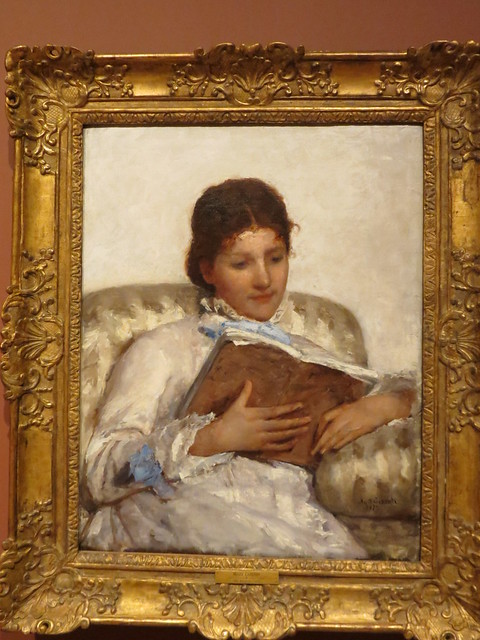
Mary Cassatt - The Reader

This isn’t a painting by Georgia O’Keefe is by Mary Cassatt and is called the reader. I don’t have any photographs of an O’Keefe painting

He spends a lot of time at his favorite bar drinking margaritas and eating chips with his friends. Orenduff lived and worked in New Mexico and knows it. I was born there and spent my high school and college years in Albuquerque and get homesick from time to time. This book is the latest mystery set in New Mexico. If you love New Mexico and fun mysteries this is for you!!

So I give this five stars out of five.

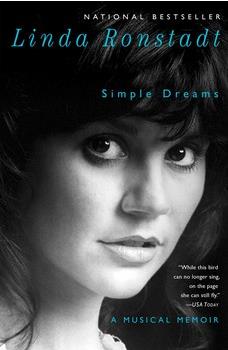
“Simple Dreams” by Linda Ronstadt

Simple Dreams - Linda Ronstadt - Book Cover

Back in the 1970’s and 80’s Linda Ronstadt ruled the airwaves as the Queen of Rock and Roll. She was the whole package, an incredible voice that could take any song and just fly, and she was incredibly cute. Later on she went off that path and got into Broadway with “The Pirates of Penzance”, then singing the “Great American Songbook” and then later Mexican folk songs. I really respected all these moves because she veered off from the sure thing and followed her heart into what she really wanted to do which by the way, were mostly commercial as well as artistic successes.  She gradually faded from my musical consciousness and when I saw her “Musical Memoir”, Simple Dreams,  I had to read it.

She grew up, the daughter of a Tucson, Arizona Ranch and Hardware store owner, in a musical family. She loved music and became a fixture on the Tucson folk music scene and then left for California for the good of her career. There she bounced around several years trying different things out and ended up getting noticed when she was part of the Stone Poneys. From there it was just a matter of time and some extremely hard work before she made it big. On the way she had an education on ethically challenged record executives, grueling road trips, and vagaries of loyalties in the business.

In her book she gives us a lot of the inside story into her musical career and how she had to fight to convince people to stay with her as she followed her own instincts. Later on she talks about she is retired from the music business now and is raising her daughters in Arizona. I had no idea, and she doesn’t say so anywhere in the book, that she had Parkinson’s Disease and that it has made it impossible for her to sing. She is not moping around feeling sorry for herself. Despite the disease making everything hard, she is staying involved with her extended family and adopted daughters.

This is a great book and I recommend it highly.

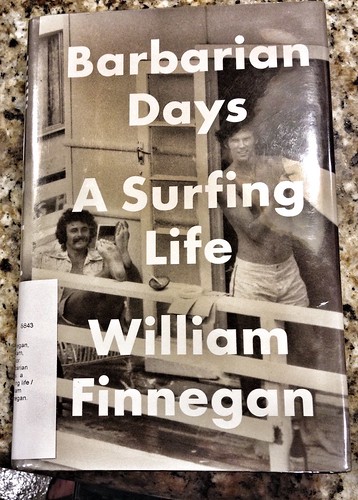
Barbarian Days – A Surfing Life by William Finnegan

Book Cover - A Surfing Life by William Finnegan

I am really excited about Barbarian Days. Talk about a great read. It is a memoir by New Yorker staff writer William Finnegan and his life told through surfing. He learned to surf at a very young age in southern California and then later in Hawaii when he was about middle school age. He was born in 1952 so his early years were in the 60’s when life of course was a lot different than it is now.

In Hawaii he talks about getting up every morning before school and paddling his board out to surf before going to school. Nobody went with him, no safety gear no nothing. At that time I was in Price, Utah and Eagar, Arizona and although far from the surf, on weekends, when we were not doing chores, my brother and ranged far and wide on our bicycles and got into and out of scrapes that my parents never heard about. Such parents would make the headline news now days as they managed a perpwalk with handcuffs led by deputies. Back then, kids were on their own much of the time.

Anyways, Finnegan’s account of the social pitfalls of school and staying out of the way of the bullies really resonated with me.

From there the story takes off on his adulthood as a surf bum going around the world, cadging cash and money as he could in search of desolate beautiful waves. I’ve never been surfing and never will go surfing but he sure makes it sound fun and terrifying at the same time. He talks about being pulled down to the bottom of the ocean and held there by powerful waves, sometimes two waves in a row ( a double wave hold down he calls it.)

He writes about the social pecking order out on the “Lineup” waiting for the waves. The big dog locals get first pick, visiting kooks (newbies) get the crumbs.

He gets a little older and finds a calling as a journalist and not a reporter who reports on the latest zoning fight at the board of adjustment. He reports on Apartheid in South Africa and Latin American revolutionary wars. He goes where the action is and sometimes where he can find a wave.

He gets a job at the New Yorker but still finds waves in the Atlantic and he is getting older but he still enjoys them backs off a little bit from the big ones.

This in one of the best books I’ve ever read and recommend it highly. It is still $14.99 for the Kindle version. I got my copy at the library. It took me longer than two weeks to read it and I’ll get it back to them today because I am getting daily emails about all sorts of terrible things are going to happen to me if I don’t return it soon.

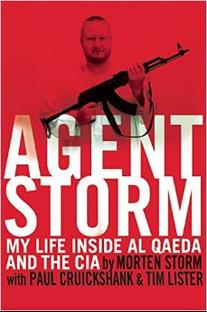
Morten Storm: “Agent Storm: My Life inside Al Qaida and the CIA” with Paul Cruikshank and Tom Lister

Agent Storm

Agent Storm: My Life inside the Al Qaeda and the CIA by Morten Storm and two CNN Reporters Paul Cruikshank and Tim Lister is a pretty wild book.

Morten Storm is a Dane who had troubles growing up. A rough and tumble household led to him being involved in gangs and drugs and lots of fights and even more chaos. As he tells it, he happened upon a book about the prophet Mohammed and liked what he found. He jumped into this with both feet and got involved in the growing Danish Muslim community and converted and then sent to Yemen for further study.

He tells about his growing radicalism and brings up many of the things that I’ve heard over the years but you hardly hear anything about in the USA. The resentment that many Muslims have over the US military being on Saudi Arabian soil is chief among them. Radical Muslims have a world view, according to Storm, that is totally alien to western views. Democracy for example is a big no no because that is man acting like Allah. Storm become more and more radicalized after he returns to Europe and then of course we have the attacks on the American Homeland on 9/11.

He is repulsed at first by the huge loss in innocent lives in direct contradiction of the Koran but is slowly brought about by the viewpoints of the radical mullahs who now say killing innocent people is God’s will. All during this time he is traveling throughout the Mideast and Europe meeting with various terrorists and raising money to support them. He has increasing doubts however about the killing of innocent civilians and then later has religious doubts about Islam, especially their concept of predestination and realizes that he can’t believe in a religion that predestined the murders of so many thousands of people.

He ends up offering his services to the Danish version of the CIA, the PET who get him involved him with the two British versions of the CIA (MI5 for internal affairs, and MI6 for overseas threats) and eventually the American CIA. His disclosures about these various agencies is hardly flattering to them. He talks about the briefings and debriefings done a very expensive hotels by these agencies and the debauchery of the PET in particular. The British agencies get a little break because they are very ethical and very reluctant to put innocent civilians in harms way.

The CIA he portrays as having very sophisticated technology but are very arrogant and also very willing to kill innocent people if necessary. He spent a lot of time with the CIA and feels that screwed him out of some major cash for tracking down some major bad guys but not paying him. Where he decides to leave his life as a double agent is when he is helping track down an American citizen, Anwar al-Awlaki, and is tipped by somebody else that he doesn’t want to be sitting by him ever because the Americans will fire off their hellfire missiles from drones or helicopters whenever they are sure of his exact position and don’t really care who else may be around at the time.

So he gets out and goes rogue, writes a book, and gets interviews on 60 Minutes. The book reads like a spy thriller but seems very believable. Storm has had an adventurous life meeting with many of the middle eastern bad guys and even finding a third wife for Anwar al-Awlaki on facebook and taking her to him in Yemen.

The book is a great read and I highly recommend it. Not only does he tell a heck of story about his life as a double agent but he also talks about the grievances that many Muslims have against the US and many of the countries in the Arab world that are seen as lackeys to America. Couter terrorism is a messy business. Our enemies are very smart and adaptable and are very committed. What struck me is the ease that terrorists can move around the world. They fight in Yemen, or Iraq, or Afghanistan, or Chechnya, and then go home and spend some time with the family in England or Denmark or wherever until they decide to go and fight somewhere else. It is also remarkable how dogged and determined the US and allied military and intelligence agencies are going after the bad guys.

This is a heck of read. I’ve been trying to figure out if Storm is legitimate or not. Who knows with a double agent. I hadn’t seen much in the way of people discrediting him besides the usual conspiracy lovers who point out things that don’t really matter. So sure he is gaming us a little bit but a lot of what he claims rings true.

Here is a 60 Minutes segment featuring Morten Storm and his claims.

Hey, I bought my book in the Kindle format on Amazon for about $3. I have put my Goodreads list on my Amazon wish list and check it regularly. Every now and then Amazon will cut the price of a book drastically for a short while. So I check my wish list regularly and grab books when they get cheap. The price for the book is back up around $10. I also download books for free from library but in these tea party crazed days, libraries here in Oklahoma have less and less money available.

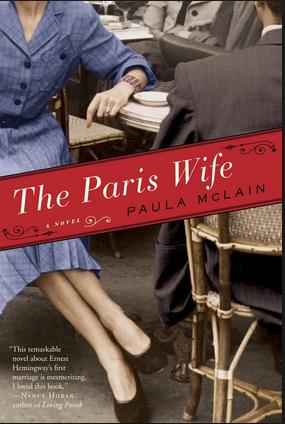
The Paris Wife by Paula McLain

paris wife cover

The Paris Wife by Paula McLain is a fictionalized account of the courtship and marriage of Ernest Hemingway to his first wife (of four), Hadley Richardson. It is told from the viewpoint of Hadley and is a very good read. There is lots of post WWI Paris ambiance, drinking and smoking in cafe’s and bars, vacations to the Mediterranean. Lots and lots of drinking of every kind of alcohol you can think of. Ms. Hemingway suffered for her husband’s art is the message I got. She kept everything together while he wrote and moped and antagonized their friends and spent time with other women until she had enough.

So I am intrigued about Hemingway again and I am putting on my reading list,  “A Moveable Feast,” his fictionalized account of his marriage with Hadley.

I give this book two thumbs up.

I read the Kindle version. I watch my Wish List pretty closely every now and then Amazon will drop the price of a book drastically for just a short while and I snagged it on such a sale. I’m so cheap!!

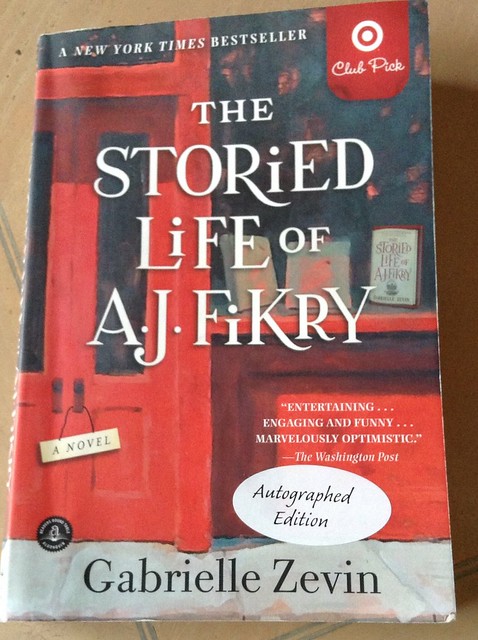
The Storied Life of A.J. Fikry by Gabrielle Zevin

The Storied Life of A.J. Fikry

The Storied Life of A.J. Fikry by Gabrielle Zevin is one of those books that is hard for me to categorize. A.J. Fikry is a widowed book seller in a small island town and is pretty darn prickly. The book opens with a pretty young publisher rep coming to present her employers line of books for the upcoming season and he pretty much throws her out after demeaning and insulting her. Then I find out that he is only in his 40’s which speaking as a sometimes crusty guy myself, that is way too young to be that crusty.

And then the storied part comes. Somebody steals a prized, very valuable book from him, somebody else leaves a baby in the store that he decides to raise and then the the pretty young bookseller comes back into the story. Given all that, I wouldn’t call this a “heart warming book” it is about a life that is lived with ups and downs and two steps backwards for every step forward. I loved the book and hated when it ended.

It is a rare book that me, my wife, and my MIL all loved. I’d loan you the copy I read but MIL wants it back.

I give it five stars.

Moloka’i by Alan Brennert

#Oahu #Beaches #Sky #Ocean #Hawaii #Hipstamatic

Before our trip to Hawaii I asked my facebook pals for recommendations for vacation books. Anne from the UK recommended Alan Brennert’s Moloka’i. It is set in Hawaii in the early 1900’s. It sounded good to me so I loaded it up on the old Kindle and read it while on vacation.

It is a novel about a girl, Rachel Kalama, living in Honolulu in a very loving, extended family. All that changes dramatically when she is suspected of having leprosy and is separated from her family and is sent to a leper colony on the island of Moloka’i. The book is about her life there and I don’t want to give anything away but I loved this book. It is about life and death and making a life where you are. It describes terrible cruelty and great love. It has cultural references to the islander’s religion and describes some of the history and effects that the missionaries had on the island.

I give it five stars out of five. I had never heard of Alan Brennert before and I will be reading more of his work.

Writing Blue Highways by William Least Heat-Moon

writing blue highways cover image

I received Writing Blue Highways as a Christmas gift. It is only 164 small format pages and I zipped through it in two days. It is not so much about the book Blue Highways as it is about the process of writing the book Blue Highways. Now there are two types of people in the world. Those who read Blue Highways and loved it and those who never heard of it. It came out in the early 1980’s and is about a 13,000 mile road trip that William Least Heat-Moon took to discover America. He follows the secondary roads, the so called “Blue Highways” of the title. He travels around and talks to people on the way. The road trip took less than a year. It took five years to write the book and the “Writing Blue Highways” is about those five years.

The pencil written first draft and the typed multiple drafts after that. The endless editing and redrafting. The submissions to publishers, editors, and agents and the rejections. It is also about the financial hardship. He had to earn a living while writing the book. Basically he wrote every spare hour that he had. The book is also about the relationships that suffered because of his writing. The book is also about the drive of the writer and the creative process and the refining process of editing and redrafting. There is not much financial reward in most writing.

I was really inspired by this book and so I am going to reread “Blue Highways” it will be one of the few books I’ve ever read three times. I love his pluck and his writing and marvel at his nerdiness. (That is a word here in Oklahoma, just so you know.)

I highly recommend this book if you liked Blue Highways or if you like reading books about the process of writing. I am not giving this copy away. I’m keeping it. I very rarely keep books these days. Apparently I gave away my copy of Blue Highways so I bought a Kindle version of it. Obviously I’m not giving it away either. Kindle is forever, or at least until Amazon has decreasing sales for three for quarters in a row. That is forever these days. Believe me, I work for a master limited partnership.

The Last Stand of the Tin Can Sailors by James D. Hornfischer

last stand of tin can sailors cover image

I was visiting my Uncle, Glenn, last summer during a family reunion and he said that he had just go through reading a great non-fiction book called The Last Stand of the Tin Can Sailors about a battle in Pacific Ocean during World War II between the United States and Japan where a small contingent of US Navy destroyers and small (“Jeep”) Aircraft Carriers fought off a force of Japanese Battleships and Heavy Cruisers who were intent on attacking General McCarthur’s invasion force of the Philippines. These small ships were the only obstacle the Japanese navy faced. His recommendation got my attention. My uncle is a former naval officer so when he says such a book is good then it probably is.

IMG_0350

So I put it on my Goodreads list and being the bargain hunter that I am, when I saw go on sale on Amazon Kindle for $2 I bought it (It is no longer on sale, sorry). Anyways the book kind of starts out slow as it provides a lot of background for the characters involved but once it got going it really zinged. The Japanese had lured the American’s battleships and large aircraft carriers away from the area with a ruse and were hard charging to attack the American invasion force.  This led to what was called the Battle off Samar.

The Japanese navy sunk four American ships by naval gunfire including one aircraft carrier (the first and only time that an aircraft carrier was sunk by surface ships) and sunk another carrier by Kamikaze attack. The ships fought back though even while they were sinking and the Japanese turned away.

This part of the book reads as good as an action thriller I’ve ever read. The next part of the book is about how the survivors were left adrift for over two days because the Navy didn’t promptly start a search and rescue operation. This is heartbreaking as it talks about the sharks showed up and started picking off the sailors one by one.

IMG_0346

The author of the book spent some time researching the Japanese side of things also. It turns out the the Japanese did not know that all they were facing was small ships. They thought that they were engaging the US Navy’s main force. The book also talks, from both the Japanese and US points of view how the Japanese deliberately did nothing to kill sailors who were abandoning their ship and were in the water and in fact one Japanese vessel’s crew saluted the sailors of one ship who were in the water after their vessel sunk. Another Japanese warship deliberately stopped firing at sailors who were still on a ship but were climbing down nets to the water.

The book makes heroes out of the ordinary sailors and ship commanders and is hard on many of the US Admirals who were more interested in their press clippings than the welfare of the sailors under their command.

This is an inspiring book and I recommend it highly.