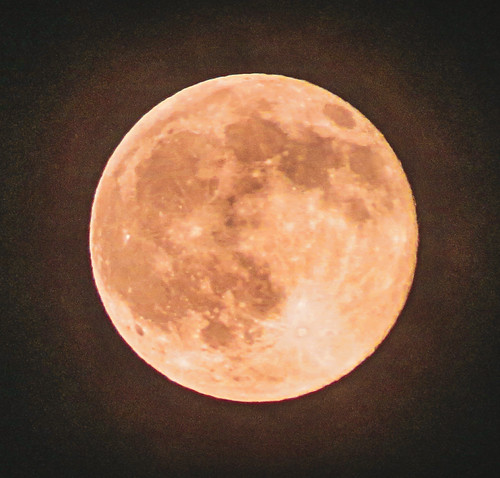
The Full Harvest Moon on September 26

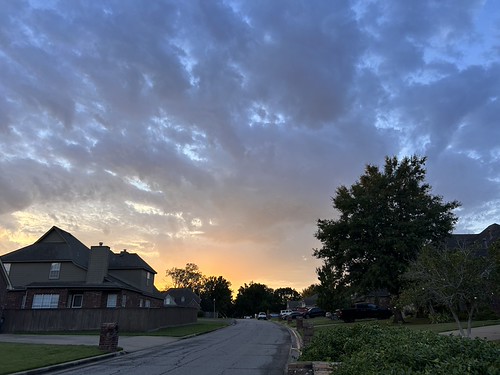
An opposite sunset (looking east). I love how just the tops of the clouds are in the sun.
A glowing cloudless sunset

Clouds add such drama to a sunset.
Check out Skywatch Friday.

The Full Harvest Moon on September 26
An opposite sunset (looking east). I love how just the tops of the clouds are in the sun.
A glowing cloudless sunset
Clouds add such drama to a sunset.
Check out Skywatch Friday.

In late September the Tulsa Urban Wilderness Coalition, of which I am a member and a Board Member, had a trail workday at the Herman and Kate Kaiser YMCA on Turkey Mountain.

It was starting to sprinkle but it was too late to postpone the date as we had already done that once already for this event.

We got our canopy and tables set up and got waivers from everyone so we were ready to go. It was kind of a light turnout that day. But that’s okay.

Here is an action shot of me, that I have stolen from the TUWC. We were clearing the trails that day so I have my loppers. There was lots of poison ivy so I didn’t wear my usual tshirt and shorts for long sleeve shirt, pants, and gloves.

Here’s a shot of a cleared trail. We lopped the brush and poison ivy back. The YMCA has their own trails on Turkey Mountain that are extensively interconnected with the more well-known Tulsa RiverParks trail system.
I am linking with Wordless Wednesday

This is my late Mother-in-law’s coffee service and cart in her former home. Shadows and reflections all over the place.

Outdoor basketball courts can produce great shadows as well.

On walks on warm days I like to have stretches of shadows on the walking trail.
I am linking to Shadow Shot Sunday
I went hiking near the end of September at Oxley Nature Center and took lots of photos. My posts this week have been centerd around that hike, so here is one more for Saturday’s Critters.

A doe and her fawns slip into the forest before I even get to the Nature Center.

I heard lots of birds and even saw some of them but got very few photographs of them. For my style of photography I need them to sit still while I fuss with the camera. This robin sat all he could then he left.

A fuzzy photo of a deer.
I found a big wildflower patch.

A cardinal playing peekaboo with me.
I love Eileen’s Blog and the other people who post on her Saturday’s Critters meme. I’ve learned so much. One of the latest things I’ve learned is to keep the Merlin App open during my entire hike so I can capture everything. It works. It goes against the grain. My whole life growing up I heard every day, “Turn out the lights! Turn off the television! Close the refrigerator door! You know what I am talking about. So now I do luxuriant power expenditures on Merlin and it works great!


Another deer. Sorry, another boomer trait, don’t waste photos.

A blob of a crow perched on a branch.


And here is a review of my hike from Relive. It will show some of the photo you have seen today.
I am linking with Eileen’s Saturday’s Critters. Check it out. Lots of dedicated animal lovers there!

The prairie at Oxley Nature Center.

The trees at the edge of the prairie welcoming the morning sun.

A little further on I came upon Bird Creek.
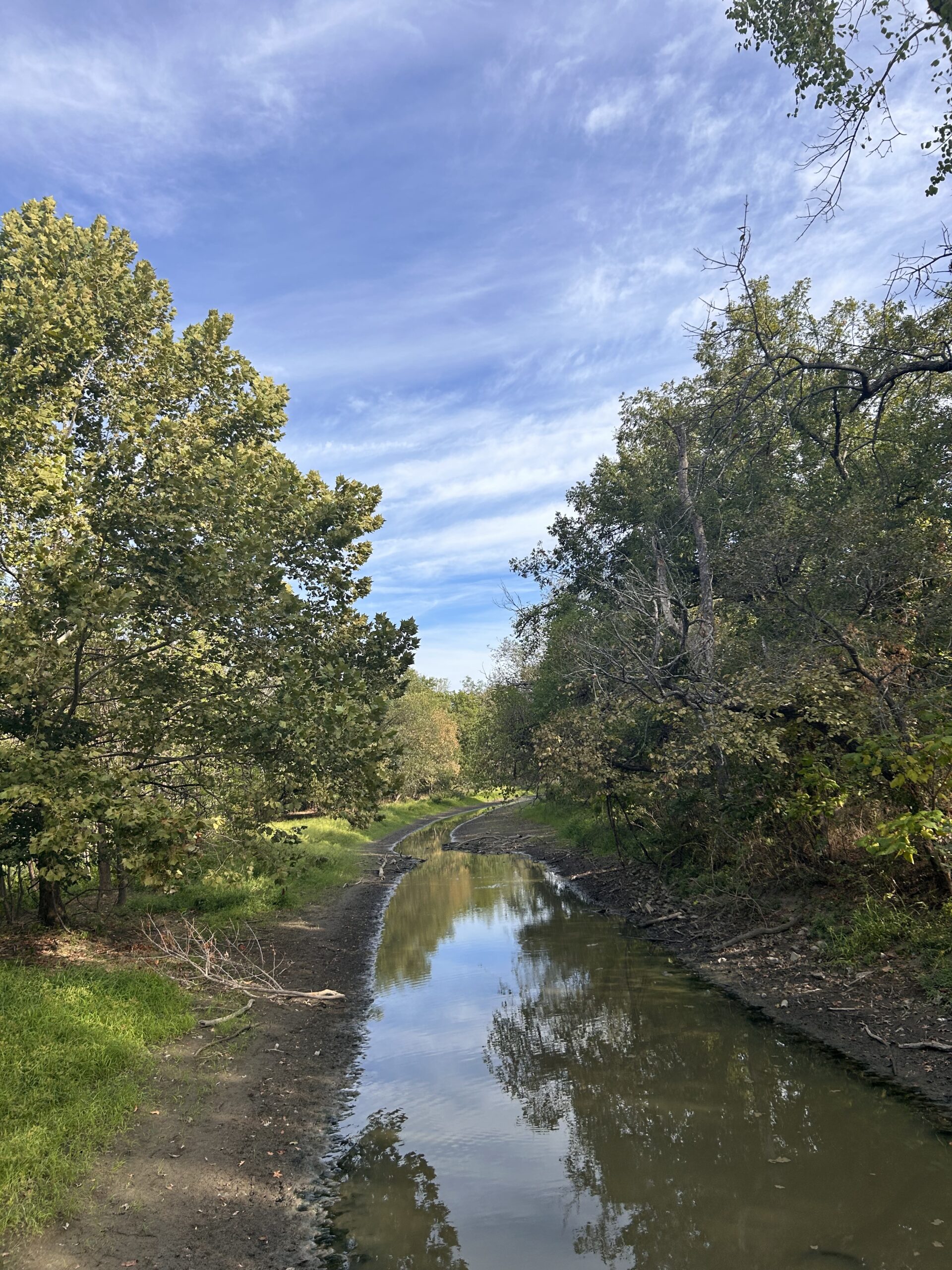
Later on in my hike I came across Coal Creek. This is the lowest I have ever seen it. I’m told by the staff that if one gets here early in the morning one can see a family of otters swimming around. I have yet to catch them. I’ve seen muskrats which I think some people confuse with otters.
I am linking with Skywatch Friday. You can also go direct to the inlinkz linky.

Last month I went hiking at Oxley Nature Center.

I loved the leaf carpeted trail

This is old US 169 that ran into town. Now it is an asphalt trail at Oxley

Big Trees

American Persimmon

Blue Mistflower

Common Boneset
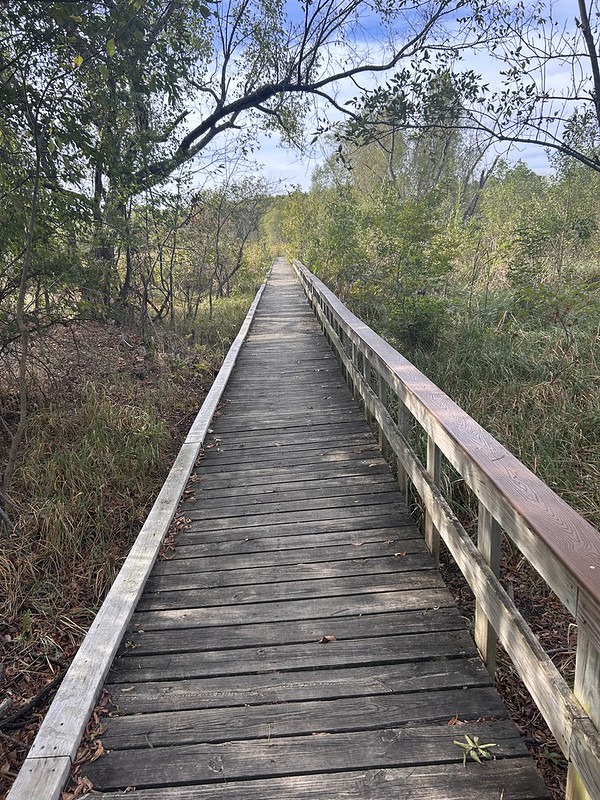
The walkway across the dry field formerly known as the Marsh. We need some rain.
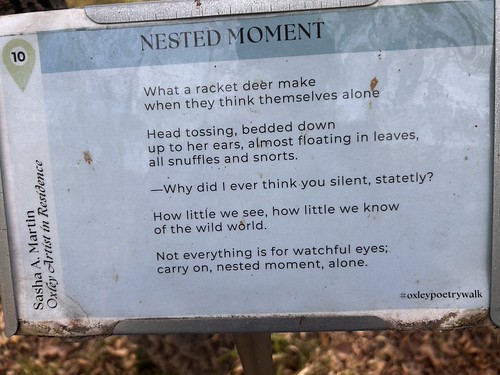
How about a Trail Poem
I finally figured that I would run the Merlin App the whole time of my hike. I picked up a ton of birds on it.
I love the Merlin App.
I am linking with Wordless Wednesday
A few weeks ago, I found myself at the north side of the Tulsa International Airport and I noticed that the Tulsa Air and Space Museum had several new aircraft on their parking display so I checked it out.
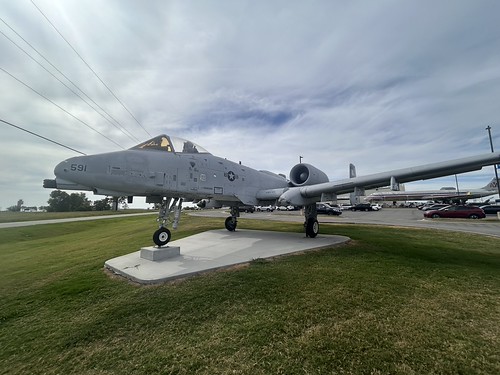
First up is the iconic A-10 Thunderbolt, or “Warthog.” A legendary warplane built for ground support. It has a high speed cannon that runs almost the entire length of the plane and is designed as a tank killer. It has been around for decades.
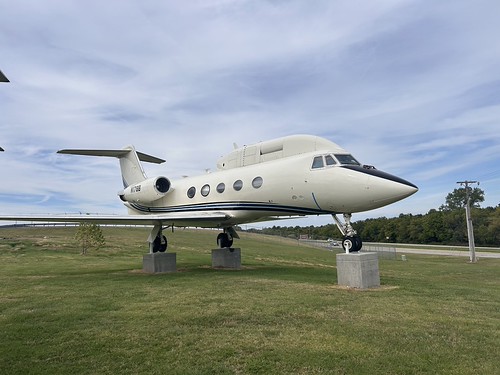
Second up is Gruman Gulfstream II-B/ G-1159B Halo II. A modified civilian aircraft designed for research the US Missile Defense Agency. You know, secret spy type stuff.

And third is a 1965 North American Rockwell NA-265-40 Sabreliner. A pilot named Bob Hoover flew this. He is famous in aviation circles for being the best pilot in aviation history. Here is his Wikipedia Listing. Talk about great stories in his wikipedia. My favorite is that he was taken prisoner by the Germans in World War II. He escaped and found his way to a German airfield and then took off on one of the planes and flew to Holland and landed inside allied lands. They should make a movie about that but nobody would believe him.

Enough with the museum. I drove closer to the airport to check out the new control tower being built. Above is the existing 1959 vintage control tower. Looks kind of cute doesn’t it?

So just turned about 45 degrees to my left and took a photo, with the same magnification, of the new tower. Wow is wow is what I said.

Here it is magnified a little bit. It is huge. Looks like about seven stories tall at the top of the tower. What, are they selling condos? It is ginormous. Ginormous is a word in Oklahoma. We are easily impressed. What can I say?
I am linking with Skywatch Friday
You can go direct to the Inlinkz Linky Here
I was in the Gardens of Philbrook in the middle of September, here is some of what I saw.

A colorful orange zinnia

A monarch butterfly

More Zinnias

Oklahoma Autumn by Eric Baker

Philbrook has a ton of trees

Some beautiful blue Adirondak Chairs. That is the new Tandy Pavilion on the rise behind the chairs.

Villa Philbrook from the Reflecting Pool

A watermelon and other plants near the new Tandy Pavillion

And speaking of pavilions. They new Tandy Pavilion makes for a great event space, plus some shady deck space. The A/C is ice cold and the restrooms are handy out in the far reaches of the gardens.
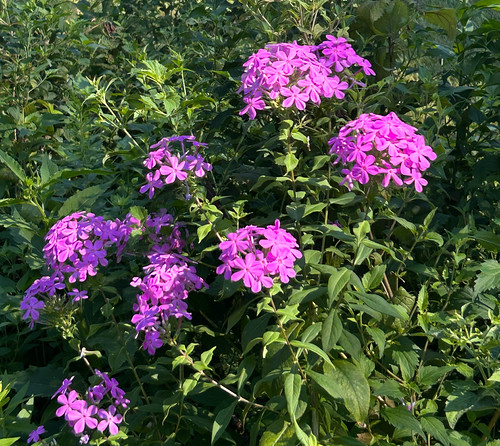
Nothing like Purple Phlox on a bright day.

A bas-relief. That may be Dionysus leading a couple ladies astray
I am linking with Wordless Wednesday
I went hiking at Tulsa’s Oxley Nature Center last week. I saw all sorts of stuff including a couple of shadowy trail bridges


I’m linking to Shadow Shot Sunday.
Our little Pomeranian Kodi loves to go swimming but his enthusiasm and joy are greater than his skill so when we take him swimming Heather has to hold on to him. Our rescue Terrier, Sadie, is not into swimming at all.

On another bike ride on the Arkansas RiverParks Trails here in Tulsa I captured these two great blue herons flying low over the water below Zink Dam.

A great egret fishing

And a bunch of great egrets and great blue herons trying to catch their breakfast.

I stopped at a bench on the trail to rest up adjacent to this sculpture of geese.

A couple weeks ago I worked “Monarchs on the Mountain” representing the Tulsa Urban Wilderness Coalition. TUWC was deeply embedded in the event. We are a co-sponsor. A couple of our board members were on the organizing committee, and another was the MC of the event. Another board member takes care of the online part of the event using our website. Monarchs on the mountain is festival celebrating Monarch Butterflies and all other pollinators and the monarch migration which is happening now.

My role (that’s not me in the photo) was to man the booth and tell people who TUWC is and what we do.

This is a diorama that another board member made a couple years ago where we illustrate Leave No Trace principles for kids. We have a little story about Hans and Hilda going on a hike with their dogs. So we talk about leashing animals, staying on the trails, don’t throw your apple cores and banana peels out into the woods in the mistaken belief that you are helping feed the animals. Those little brown round things at the bottom of the photo are dog poops, not cinnamon rolls, so we throw them out and ask, “What do you do when your dog poops in the woods?” Answer is of course that you bag it and dispose of properly.
Working the booth is a lot of fun. I’ll tell you one thing, we get lots of Girl Scouts come by and they have the life cycle of monarch butterflies and Leave No Trace principles down. I’m very impressed with them and their adult leadership.
I am linking up with Saturday’s Critters